
REVIEW · WILSONS PROMONTORY TOURS
Melbourne: Wilsons Promontory Morning Wilderness Cruise
South Point feels close. This 150-minute morning wilderness cruise from Melbourne uses a world-class amphibious boat to whisk you across Bass Strait toward Wilsons Promontory National Park, where granite cliffs, white sands, and big wildlife potential all show up together. You’ll get expert talk as you pass Skull Rock and scan the water for seals, dolphins, and (when conditions cooperate) migrating whales.
I love two things most. First, the wildlife factor: you’re not just land-viewing Wilsons Promontory, you’re cruising in the marine national park where seals and dolphins are common sightings. Second, the human factor: the guide teams on board tend to be sharp, funny, and genuinely into the area, including names like Damo and Nash, plus Matt and others you might meet on different departures.
One possible drawback: this is a weather-dependent trip. Wind and waves can run high, and that can make the ride feel rough and sometimes limit wildlife sightings, especially larger ones like whales. If you’re prone to motion sickness, plan for that.
In This Review
- Key points before you go
- From Melbourne to the Prom: how the morning pace works
- Where you meet and what to do before departure
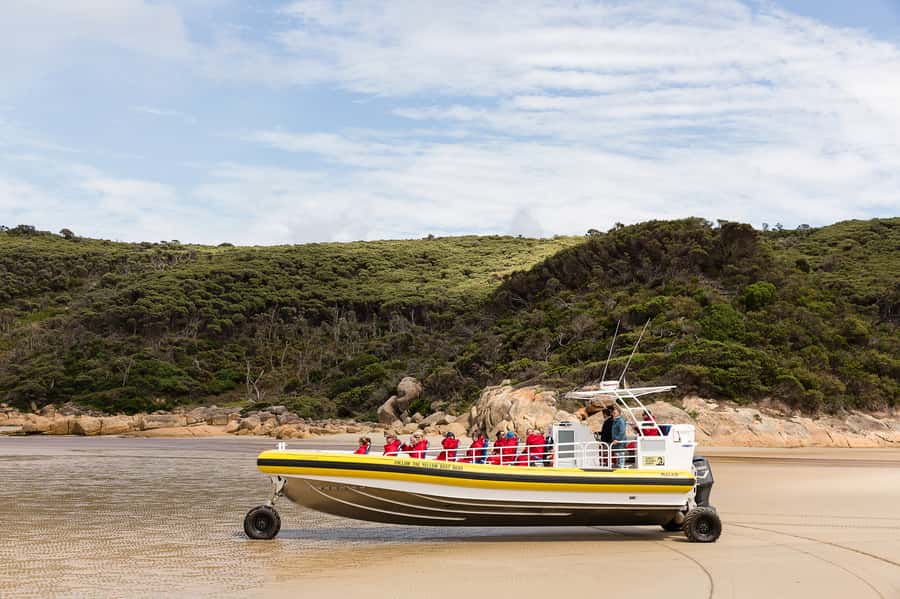
- The amphibious boat: the ride you’re signing up for
- South Point and the southern mainland moment
- The Glennies, Anderson Islets, and Anser Island
- Mount Oberon and Norman Beach: quartz sand meets prehistoric boulders
- Skull Rock: the closer you get, the weirder it looks
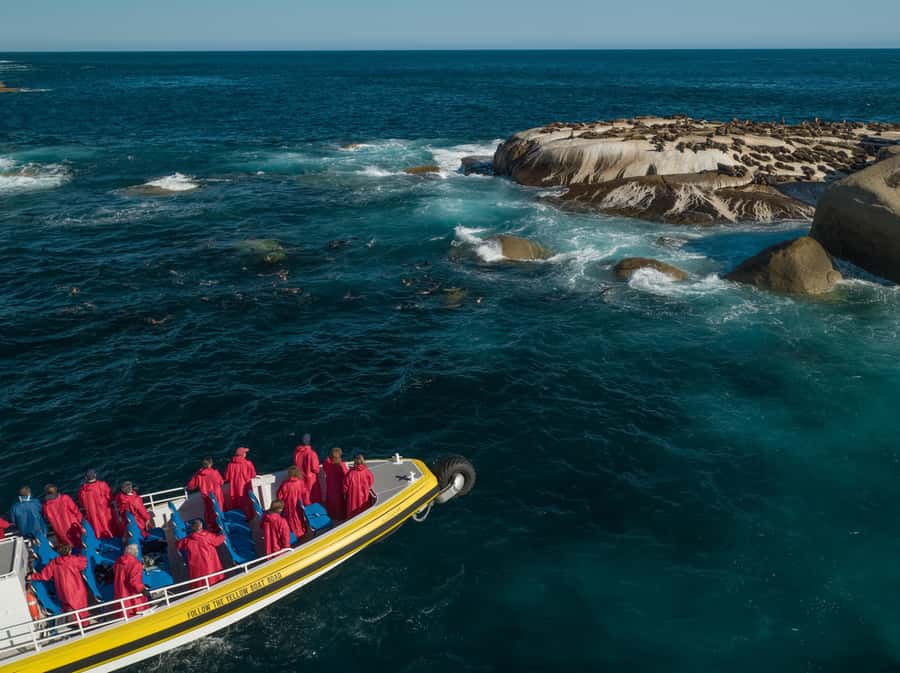
- Wildlife spotting: seals, dolphins, and the whale question
- Guides on board: the difference between seeing and understanding
- Included jacket and the motion-sickness reality check
- Food and drinks: plan for a snack-less cruise
- Price check: is $109 worth it for 2.5 hours?
- Who this cruise suits best (and who should think twice)
- Quick “before you book” decision guide
- FAQ
- How long is the Wilsons Promontory Morning Wilderness Cruise?
- What is included in the ticket?
- What should I bring?
- Where is the meeting point?
- Do they provide food and drinks on the cruise?
- Is the tour dependent on weather?
- Are service animals and infants allowed on board?
Key points before you go
- World’s largest custom-built amphibious boat: you’re riding in a purpose-built craft designed to handle both water and shore views.
- South Point payoff: you see the southernmost tip of the Australian mainland from the sea.
- Wildlife spotting is a main event: think seals and dolphins as your realistic targets; whales are weather-sensitive.
- Skull Rock looks stranger up close: the rock formation reveals more skull shapes the nearer you get.
- Good guide commentary matters here: the best value isn’t just the scenery; it’s the context about geology and wildlife.
- Weather is the boss: good days mean calmer water and better viewing.
From Melbourne to the Prom: how the morning pace works
This cruise is built for a morning rhythm. You start in Melbourne, then spend the next 150 minutes heading out into Bass Strait and around Wilsons Promontory National Park’s coastline. The timing matters because you get to experience that crisp “morning light + ocean colors” mix that’s hard to replicate later in the day.
There’s also a very practical reason this works: you’re not coordinating a full-day road trip, hikes, and lookout stops. Instead, you’re on the water with a guide doing the navigation and interpretation for you. For many people, that’s the whole point—less logistics, more time actually watching wildlife and studying the coastline.
Where you meet and what to do before departure
Meet at the ticketing office in the same building as the Tidal River Open Air Cinema. Then plan to check in 30 minutes before the departure time. That extra time is not wasted; it’s for the safety briefing, getting you sorted for the boat, and settling in before you head out.
Now the smart part: wear warm clothing. Wilsons Promontory’s coastline can feel colder than you expect, especially once you’re moving over open water. Even with the jacket provided, you’ll feel happier if your layers are already comfortable.
The amphibious boat: the ride you’re signing up for
You’re boarding the world’s first custom-built amphibious boats in Melbourne. Translation: this is not a dainty sightseeing ferry. It’s a serious machine designed for getting you close to rugged coastline while still handling real sea conditions.
That design affects the feel of the trip. People describe the ride as exhilarating—fun when you’re in the moment, but also a reminder that the ocean can be choppy. One traveler even noted that if the water is rough and you’re sensitive to motion sickness, you should only go on calmer days.
Good news: the experience includes a waterproof and windproof jacket. Even if you don’t expect to get wet, bring your expectations down to earth. Spray happens. Waves happen. And on this kind of coastline, the deck time matters.
South Point and the southern mainland moment
Early on, the cruise focuses your attention on the icon: South Point, the southernmost tip of mainland Australia. Seeing it by boat is different from seeing it from land. On land, you look out. On the water, the coastline wraps around you and you’re dealing with the scale of the granite coast in a more three-dimensional way.
This is also where the guide talk starts to click. You’re learning what you’re looking at—coastline shapes, marine park context, and why these waters matter for wildlife. If you enjoy explanations that connect geography to real animals and habitats, this portion is your warm-up act.
The Glennies, Anderson Islets, and Anser Island
Once you’re out in the marine stretch, the itinerary turns into a classic coastal “work through the points” loop. You’ll cruise past rugged features including The Glennies, Anderson Islets, and Anser Island.
What makes these stops valuable is that they’re not random dots on a map. They’re part of how the coast is structured—granite outcrops, marine channels, and island edges where animals feed, rest, and move through. That’s why wildlife spotting isn’t just luck-based. You’re scanning from the right kinds of locations.
A practical note: the sea state can change what you see. On rougher days, you might get less time viewing whales in particular, but you can still have great seal and dolphin encounters. Even when the big sightings don’t happen, you’re still getting that “rugged coastline in motion” experience.
Mount Oberon and Norman Beach: quartz sand meets prehistoric boulders
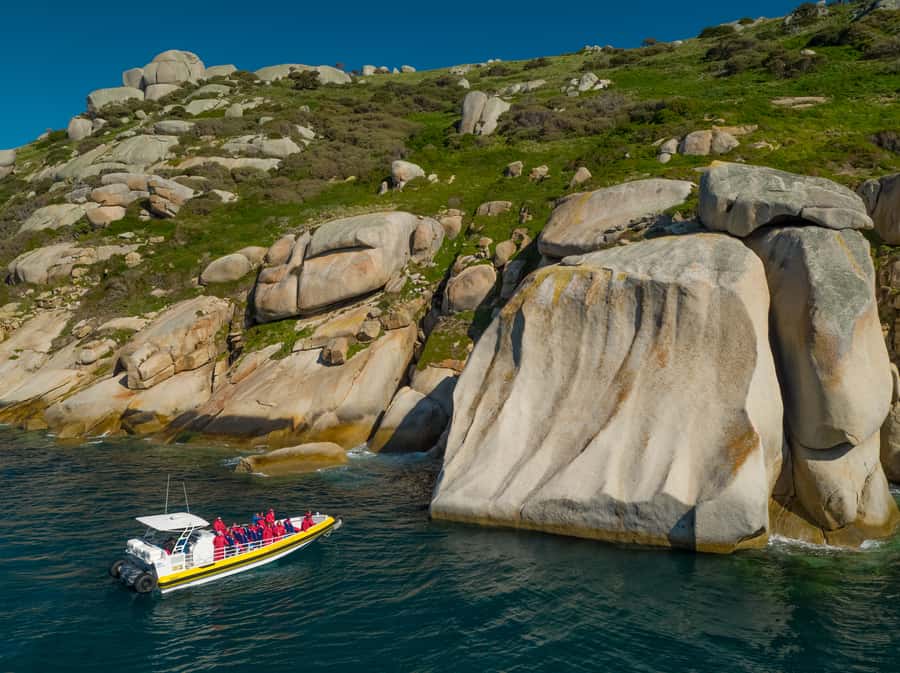
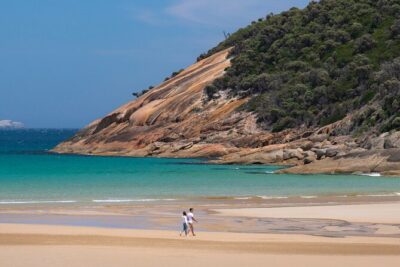
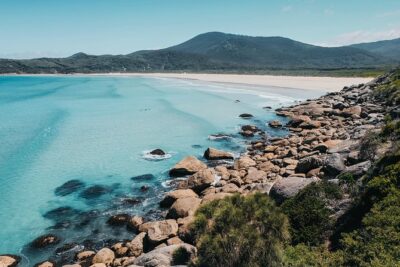
One of the coolest shifts on the cruise is the move to Mount Oberon and nearby Norman Beach. Mount Oberon is described as having prehistoric boulders, and you’ll see them set against the white quartz sands of Norman Beach.
This pairing matters because it gives you a visual contrast: the hard, old rock against pale sand. It also changes how the water looks. Quartz sand brightens the beach color, and the granite gives you that darker, dramatic coastline edge.
If you like geology that you can actually see rather than just read about, this part has real payoff. The guide’s job here is to help you interpret what you’re seeing—why the rocks look the way they do, and how water and time shaped these coastlines into today’s forms.
Skull Rock: the closer you get, the weirder it looks
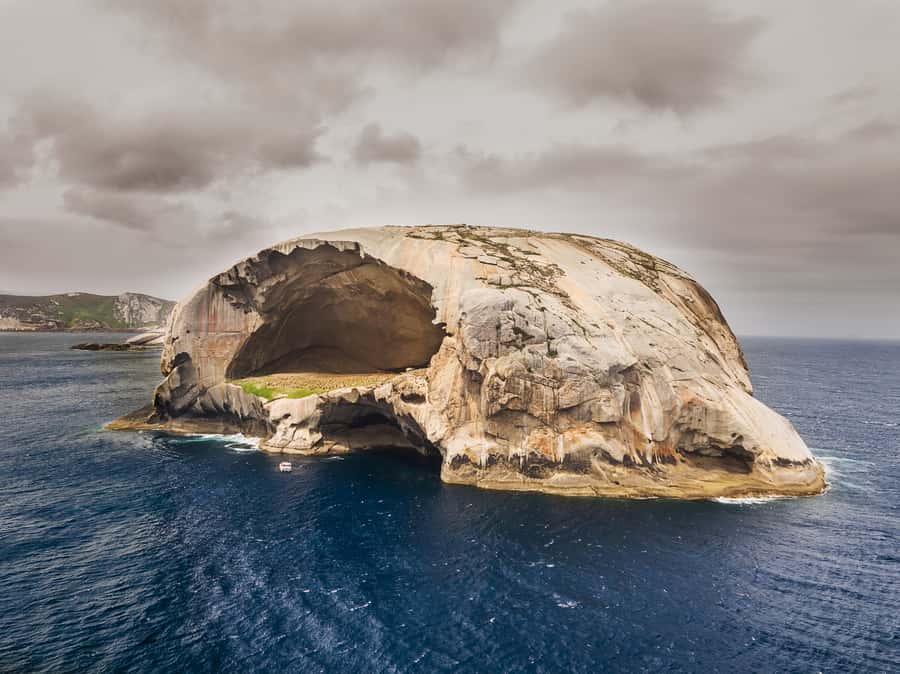
Then comes the headline: Skull Rock. The description is spot-on—this granite monolith is sculpted by waves, sitting in crystal-blue water, and it looks even more mysterious as you get closer.
What you’re really watching for is the face-like effect. The closer you cruise, the more skull shapes become visible in the rock’s face. This is one of those sights where it’s easy to miss details if you’re staring too hard at your own photos. Instead, try a simple pattern: look up, then look toward the waterline, then scan back to the rock face. You’ll catch more of the formation that way.
Skull Rock also tends to anchor the rest of the cruise in your mind. Once you’ve seen it, the surrounding islands and coastline shapes connect more clearly.
Wildlife spotting: seals, dolphins, and the whale question
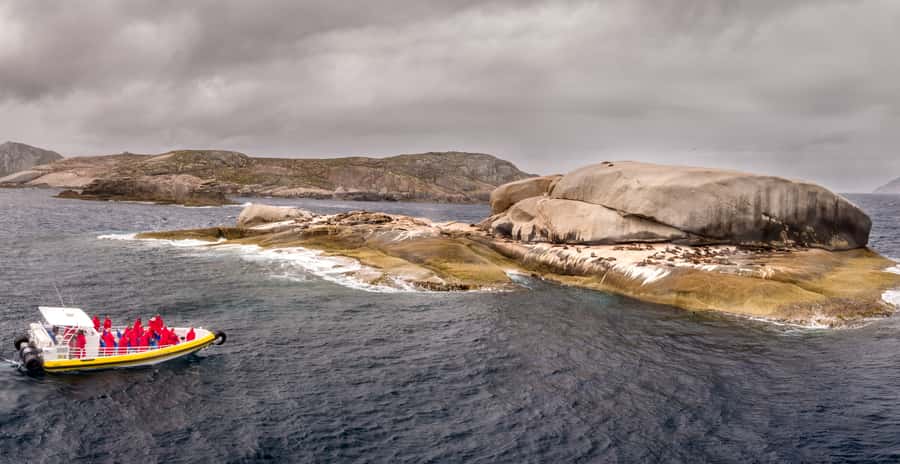
Wildlife is the main reason most people book this. And the realistic targets from the trip setup are thousands of seals and dolphins, with migrating whales possible when conditions allow.
Here’s how to think about it so you don’t feel disappointed:
- Seals and dolphins are often easier to track because they’re frequent and active near the coastline and along travel routes.
- Whales are more weather-sensitive. On windy or choppy days, visibility and comfort drop, and whale spotting can be less likely.
Either way, you’ll spend real time looking. That’s part of the value: you’re not rushing through a stop and then moving on. You’re in the water, with wildlife scanning built into how the cruise moves.
Guides on board: the difference between seeing and understanding
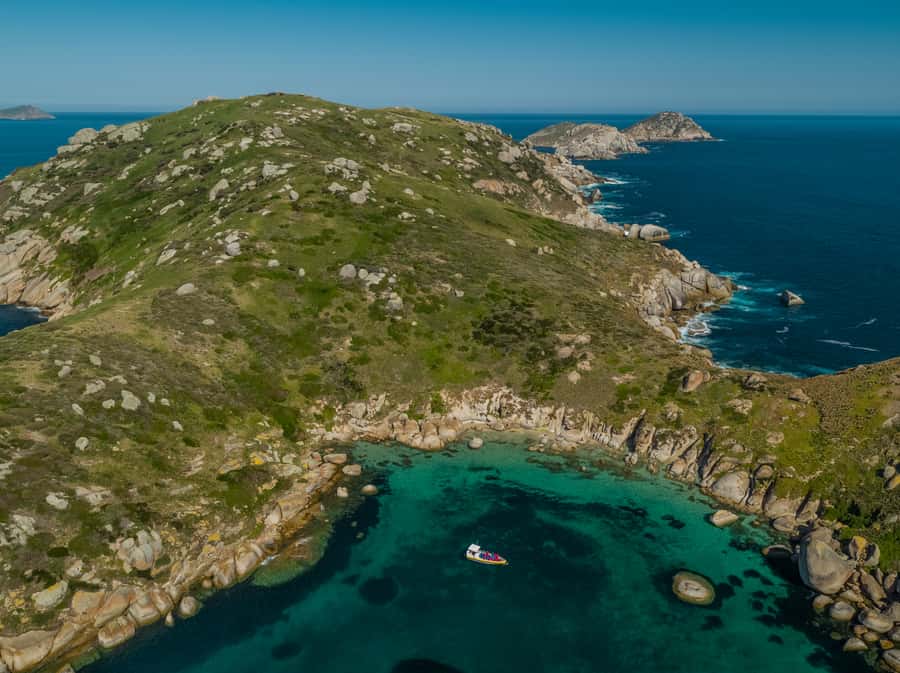
The cruise includes a live English-speaking guide, and the guides’ style is a major reason the rating stays so high. People call out that guides are not just repeating facts. They’re making the trip feel well-run—safety first, but also upbeat and informative.
You might meet different guide combinations depending on the date, including names like Damo and Nash, Matt and Nash, and other team members such as Dave and Gareth. The common thread in how they lead: lots of practical explanations about landmarks and wildlife, delivered in a way that keeps the boat atmosphere light rather than stiff.
If you care about “why” as much as “what,” this is where you’ll feel it.
Included jacket and the motion-sickness reality check
Included with your booking is a waterproof and windproof jacket. That’s a big deal on an ocean cruise. It’s not about staying dry for fashion—it’s about being able to stand, look, and enjoy the ride without freezing or constantly ducking inside.
Also, if you’re worried about motion sickness, take it seriously. One traveler specifically mentioned ginger tablets being offered to help with seasickness. I’d treat that as a sensible backup plan, not a magic cure. If you know you get sick easily, dress in warm layers, keep your head still, and consider a calmer-weather day if you have the flexibility.
Food and drinks: plan for a snack-less cruise
Food and drinks aren’t included. For a 150-minute trip, that might be fine if you eat before you go. But if you tend to get hungry on outings, bring a plan—eat in Melbourne first, or have something ready nearby before check-in.
The key point: don’t assume you’ll get refreshments on board. The cruise is built around the boat ride, the wildlife scan, and the guide talk.
Price check: is $109 worth it for 2.5 hours?
At $109 per person for 150 minutes, you’re paying for three things at once:
- a guided trip out on the water (not self-drive sightseeing),
- the amphibious boat experience,
- and the included jacket plus onboard interpretation.
The boat part is the differentiator. An amphibious craft lets you experience the coastline in a way standard boats often can’t match, and it’s tuned for this kind of rugged marine national park coastline.
Is it “cheap”? No. But it’s also not overpriced if you compare it to how hard it can be to replicate the same experience with your own transport and timing. For many people, especially if you don’t want a full-day drive plus lookout stops, the value lands well.
I’d call it a good spend when:
- you want wildlife and geology context,
- you’d rather be on the water than hiking,
- and you can choose a day with decent weather.
Who this cruise suits best (and who should think twice)
This is a great choice if you’re the kind of traveler who likes:
- scanning water for seals and dolphins,
- seeing iconic sights like Skull Rock without hassle,
- and learning from a live guide rather than reading on your own.
It’s also a good pick for families. One review mentioned a 9-year-old had a standout day, and the overall vibe seems energetic and family-friendly.
Who should think twice? If you’re very sensitive to rough water, or you know you struggle with motion sickness, don’t treat this as guaranteed comfort. Choppy conditions can limit whale sightings and make the ride less pleasant.
Quick “before you book” decision guide
Book this cruise if you want a guided amphibious-boat view of Wilsons Promontory with real wildlife potential and a strong focus on interpreting what you see. It’s especially worth it when you can pick a day that’s likely to be calm and clear.
Pass or reconsider if you hate cold wind, get motion sickness easily, or only care about seeing whales. This trip is best when you’re open to seals and dolphins as your likely wins, and you treat whales as a bonus.
If weather is looking questionable, remember: the operator states it requires good weather, and poor conditions can lead to either a different date or a full refund. That flexibility is part of the safety net.
FAQ
How long is the Wilsons Promontory Morning Wilderness Cruise?
The cruise duration is 150 minutes.
What is included in the ticket?
Your ticket includes the boat trip, a live guide, and a waterproof and windproof jacket.
What should I bring?
Bring warm clothing. If you’re concerned about seasickness, it can help to be prepared for windy or wave conditions.
Where is the meeting point?
Meet at the ticketing office in the same building as Tidal River Open Air Cinema.
Do they provide food and drinks on the cruise?
No. Food and drinks are not included.
Is the tour dependent on weather?
Yes. The experience requires good weather, and if it’s canceled due to poor weather, you’ll be offered a different date or a full refund.
Are service animals and infants allowed on board?
Service animals are permitted on board. Infants must sit on laps.
Wilsons Promontory Tours, side by side.
 ★ 4.9Wilsons Promontory Small Group Day TourFrom $155155 reviews
 ★ 4.7Wilsons Promontory Wilderness TourFrom $78103 reviews
 ★ 4.5Wilsons Promontory Day Trip from MelbourneFrom $11497 reviews
 ★ 5.0Wilsons Promontory Hiking Day Tour – 8 Person Max Small GroupFrom $15790 reviews
 ★ 4.8Wilsons Promontory National Park Full-Day Eco TourFrom $11253 reviews
 ★ 5.0Wilson’s Promontory Small Group Eco Tour from MelbourneFrom $12148 reviews
 ★ 5.0Wilsons Promontory Wilderness Day TourFrom $11417 reviews
 ★ 5.0Wilson’s Promontory & Phillip Island – ‘Prom & Penguins’ TourFrom $8585 reviews
Browse the lists this tour appears in