REVIEW · MELBOURNE
The Explorer – Cranbourne Gardens
Need a quick fix of garden wonder? This short bus tour at Royal Botanic Gardens Victoria Cranbourne shows off the Australian Garden in about 25 minutes, with driver-led narration as you roll through it. You get an easy overview of several distinct sections, from the Red Sand Garden to the Peppermint Garden, without the fatigue of long walking.
I especially like two things. First, it’s a smart way to get your bearings fast in a big place: you see several highlights in one go, including Ian Potter Lake and the arid areas. Second, the bus format is ideal if you’re traveling with kids or you have mobility limits—everyone can still enjoy the plants and stories, because you’re seated and not doing constant steep detours.
One possible drawback: this is still a quick loop. If you want long, in-depth strolling (or you’re chasing specific plants with time to spare), you’ll likely want to hop off and spend extra time on foot. Also, the tour runs in good weather only—so plan a backup if clouds and rain show up.
In This Review
- Key points before you go
- A fast way to get your bearings at Royal Botanic Gardens Victoria Cranbourne
- Boarding details: open-air minibus, small group, and driver narration
- Red Sand Garden to Peppermint Garden: the east-coast loop you’ll remember
- Ian Potter Lake and the dry places: Arid Garden and Dry River Bed
- Hop-on flexibility: build a personalized garden day
- Meet the crew: why the commentary style works (Peter and Beas)
- Price and family value: $10.76 with free admission noted
- Who this bus tour fits best (and who should skip it)
- Should you book The Explorer at Cranbourne Gardens?
- FAQ
- How long is The Explorer – Cranbourne Gardens?
- Where do I redeem my ticket?
- What is the price per person?
- What’s included in the ticket?
- Is there live commentary during the tour?
- Can I hop off at stops during the experience?
- Is this tour suitable for families and kids?
- Is the tour accessible for people with mobility issues?
- Are service animals allowed?
- What happens if the weather is bad?
Key points before you go
- 25 minutes gives you a high-impact overview of a large garden complex
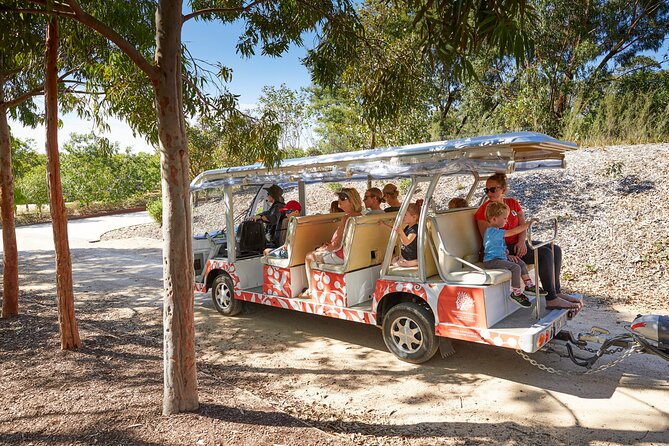
- Open-air minibus means you’ll feel the breeze and get natural photo opportunities
- Live commentary turns plant names, garden history, and cultural meaning into an easy listen
- Hop-on flexibility helps you turn the bus loop into a longer day at your pace
- Designed for families and mobility-friendly visitors, since most viewing happens from the bus
Still weighing up how to spend your days in Mornington Peninsula? A few more tours worth a look.
- Full-Day Penguins and Wildlife Nature Experience from Melbourne★ 5.0 · 150 reviews
- Peninsula Hot Springs Spa Experience and Express Transfer Shuttle★ 5.0 · 131 reviews
- Cape Woolamai Sightseeing Cruise from San Remo★ 4.5 · 72 reviews
- Peninsula Hot Springs and Beach Boxes Day Trip from Melbourne★ 4.5 · 64 reviews
A fast way to get your bearings at Royal Botanic Gardens Victoria Cranbourne
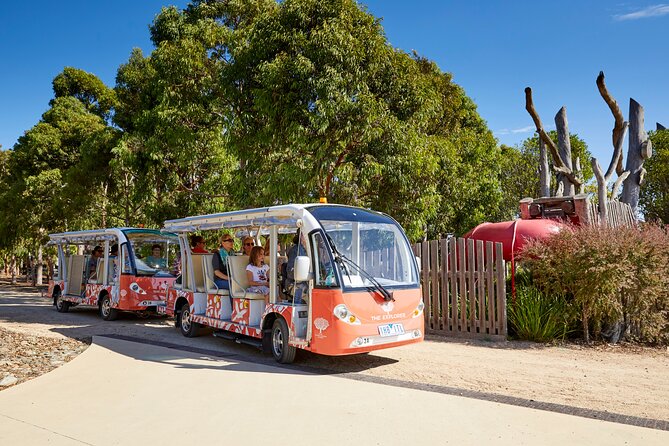
The Royal Botanic Gardens Victoria Cranbourne site is big—about 37 acres / 15 hectares—and a lot of people underestimate how long it takes to see it all on foot. The Explorer is built for the opposite plan: a short, guided circuit that helps you understand what’s where before you go exploring.
If you’re on the Mornington Peninsula and squeezing in time before something else (many people are also heading onward toward Phillip Island), this tour makes the gardens manageable. In just about 25 minutes, you get a guided snapshot of multiple themed areas, so when you later walk the paths, you know what you’re looking at.
I also like the way the tour is structured around real garden sections instead of generic “we’re driving around” sight-seeing. You pass the Red Sand Garden, wind through other named highlights, and end up back through areas like the Peppermint Garden. That matters because the Australian Garden is all about variety—different plants adapted to different conditions, presented in a way that’s easier to appreciate when you first get a map in your head.
Boarding details: open-air minibus, small group, and driver narration
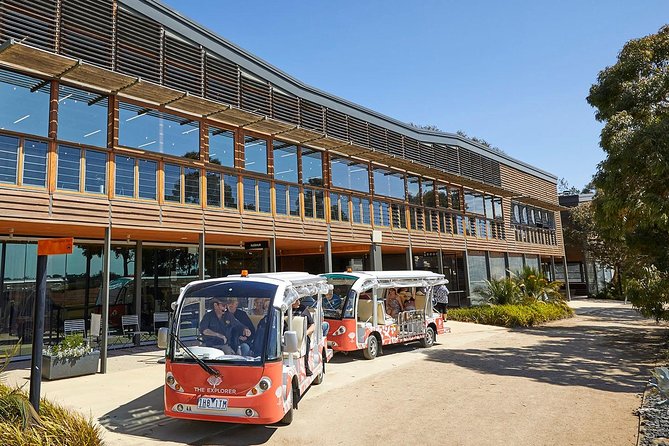
The Explorer departs from the Visitor Centre area inside Royal Botanic Gardens Cranbourne. You’ll redeem your ticket at Royal Botanic Gardens Cranbourne, on Ballarto Road and Botanic Drive (Cranbourne VIC 3977). There’s also a nearby public transport connection, which helps if you’re not driving.
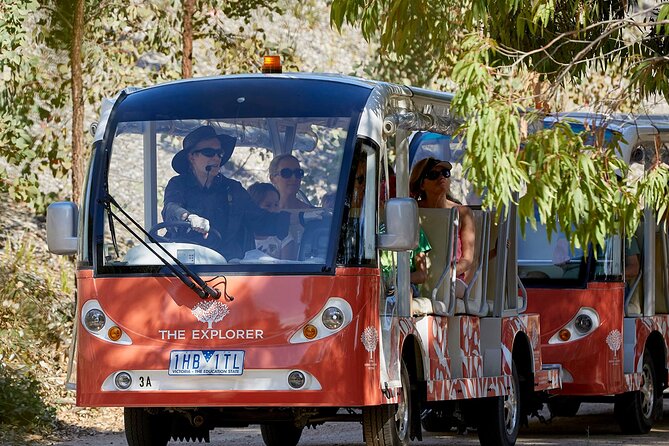
This runs on an open-air minibus, so you’re not stuck in a closed coach. It’s a practical way to stay cooler than you might expect, especially on warmer days. You’ll also hear live commentary as you go, delivered by the driver/guide, and the tour description emphasizes that you’ll get both nature interpretation and garden context.
Group size is capped at 25 people, which usually keeps things feeling personal. It’s not a huge crowd shuffle, and the narration has room to stay clear rather than turning into background noise. The experience also notes that service animals are allowed, and the overall format is suitable for most people, including families and visitors with mobility issues.
Red Sand Garden to Peppermint Garden: the east-coast loop you’ll remember
The tour’s core “big picture” value is that it strings together distinct parts of the Australian Garden in a logical order. The circuit starts at the Royal Botanic Gardens Victoria Cranbourne area and takes you through themed zones with live commentary along the way.
Here’s what you’ll pass, and what it means for your visit:
Red Sand Garden
This is where the tour starts to set the tone—an area built around a dry, sandy look and feel. Even if you’re not a plant expert, you’ll get the story behind why Australian flora looks and behaves the way it does, and why gardeners group them by environment.
Howson Hill
You’ll move through a section called Howson Hill, which helps break the garden into parts rather than one long blur. It’s the kind of stop that makes it easier to spot how terrain influences planting.
East coast of the Australian Garden
The route then travels along the east-coast side of the broader Australian Garden concept. This is useful because the commentary can connect plant choices to place and conditions. You’re not just seeing names—you’re hearing what to notice.
Peppermint Garden
The tour winds back through the Peppermint Garden. This is a great reminder that Australian gardens aren’t only about arid themes. You’ll see how different plant communities sit together across the overall grounds.
A quick caution: because you’re on a bus, you can’t linger at every point like you would on foot. You’ll still get visuals and information, but if you’re the type who likes to zoom in on details for 20 minutes at a time, plan to hop off later.
Ian Potter Lake and the dry places: Arid Garden and Dry River Bed

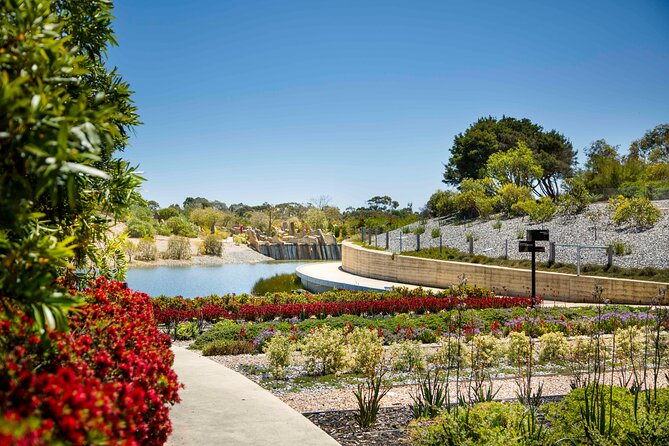
One reason people love this tour format is that it helps you recognize variety quickly. The itinerary includes Ian Potter Lake, the Arid Garden, and the Dry River Bed—three spots that show how different “Australian environments” are translated into a designed garden.
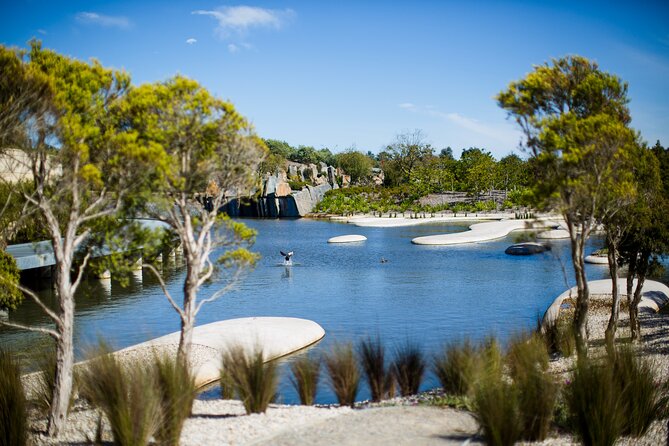
Ian Potter Lake
Even on a short tour, a named water feature anchors the visit. Lake areas often change how the surrounding plants grow and look, and the commentary helps connect that to the broader garden theme. If you’re traveling with kids, this is the kind of point that helps keep attention focused: it gives the tour an obvious visual “pause.”
Arid Garden
The Arid Garden section signals that you’ll shift from lush-looking expectations to plants adapted for dry conditions. The value here isn’t that you’ll become a cactus scholar—it’s that you’ll learn to look at leaf shapes, spacing, and the overall design logic behind “survival mode” plants.
Dry River Bed
A Dry River Bed is a clever garden concept because it makes a seasonal or normally dry environment legible. You’re seeing how the garden builds a sense of water flow and dryness, even if there’s no active stream. For photos, it also gives you texture and contrast, which often beats another round of flat green-path shots.
If you’re a keen gardener, this is the part that makes the tour feel practical. It’s not just scenic; it’s a guided tour of how environments shape planting decisions.




Hop-on flexibility: build a personalized garden day
Your ticket includes flexibility to hop off at various stops within the Australian Garden. That’s a big deal for value, because it turns a short bus loop into something you can customize.
Think of the bus ride like your “preview trailer.” You get the names and the story beats quickly, then you decide where to spend time walking. If mobility is an issue, hopping off can also be selective—you can get closer to one feature while still keeping the rest of your energy intact.
This is also a smart approach if you want to combine bus and breaks. One review notes that there’s a great cafe on site, which is exactly what you want after a short tour: sit down, cool off, and plan your next step. You’ll likely get more satisfaction by pairing the bus loop with a couple of focused walking stops rather than trying to cover everything.
One bonus detail from real-world experience: people have spotted wildlife, including a wallaby. That kind of moment is easier to catch when you’re not rushing—so using the hop-on/off feature can help you create the timing for those little surprises.
Meet the crew: why the commentary style works (Peter and Beas)
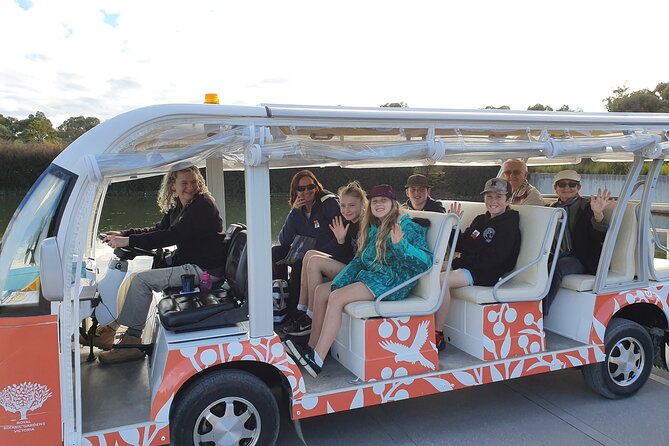
The Explorer experience isn’t just “transport.” The driver/host does the storytelling live, and that narration is a key part of why the short tour lands well.
A few guide names come up in feedback. Peter is highlighted as a strong driver/host with a lot of history and plant information. Another person, Beas, is mentioned as excellent—especially for keeping the experience engaging for all ages.
Here’s what to pay attention to while you ride. When the commentary points out a plant feature, try to notice it visually right away—leaf shape, growth habit, or why a certain area is grouped the way it is. When the narration touches on garden history or cultural significance, you’ll understand why some spaces feel designed rather than random.
And yes, some of the hosting style includes humor and friendliness. In a tour this short, a warm, clear voice helps the information stick.
Price and family value: $10.76 with free admission noted

At $10.76 per person, this is positioned as an affordable way to see a lot of ground quickly. The real value isn’t only the ticket cost—it’s the time you save. When a garden is as large as Cranbourne, even an hour can feel like a lot of ground if you’re planning your route. This gives you a guided foundation in about 25 minutes, then you decide whether you want to extend the day.
Your ticket notes free admission, which is especially helpful if you’re trying to control costs on a short visit. You’re paying for the guided bus experience, while admission to the gardens is marked as free with the ticket.
Families have an extra lever. The operator mentions a Kids Explorer option where children ride free during school holidays. Since rules can be tied to that specific Kids Explorer setup, check the details when you book. Still, it’s a meaningful savings point if you’re traveling with kids during the holiday period.
Also, the tour max group size of 25 helps keep it comfortable rather than chaotic—another “hidden value” when you’re paying a low price and still expect a quality experience.
Who this bus tour fits best (and who should skip it)
This is a strong match if you fall into one of these groups:
- You want an easy overview of the Royal Botanic Gardens Cranbourne Australian Garden without doing a marathon of walking
- You’re traveling with mobility issues, since the format keeps most viewing seated and controlled
- You’re visiting with kids who do better when the day includes a scheduled activity
- You’re a nature lover or keen gardener who wants a guided primer before walking
It may not be your best plan if you want a long, slow, self-guided day where you can spend 30–60 minutes at each area. Since the tour duration is about 25 minutes, you’ll likely want to follow it with more time on foot if you want deeper plant study.
Weather also matters. The experience requires good weather, and if it’s canceled due to poor weather, you’ll be offered a different date or a full refund. So if forecasts look shaky, keep your schedule flexible.
Should you book The Explorer at Cranbourne Gardens?
I’d book this if you want maximum garden orientation with minimal effort. For a quick stop on the Mornington Peninsula, it’s one of the easiest ways to understand the grounds fast. The short duration, open-air bus format, and live driver commentary make it a good fit for families, visitors with mobility limits, and anyone who hates the “I’m lost in the gardens” feeling.
Skip it only if your goal is deep, hands-on, hours-long exploration where you need lots of time to stop, read, and linger in each section. In that case, you might prefer more independent time on the paths.
If you’re undecided, here’s the simple way to decide: book the bus if you want a guided snapshot; book extra walking time if you want the full experience.
FAQ
How long is The Explorer – Cranbourne Gardens?
The tour lasts about 25 minutes.
Where do I redeem my ticket?
You redeem at Royal Botanic Gardens Cranbourne on Ballarto Road and Botanic Drive, Cranbourne VIC 3977.
What is the price per person?
The price listed is $10.76 per person.
What’s included in the ticket?
The ticket includes a driver/guide, live commentary on board, and a professional guide. Admission is marked as free.
Is there live commentary during the tour?
Yes. The tour includes live commentary on board from the driver/guide.
Can I hop off at stops during the experience?
Yes. Your ticket includes flexibility to hop off at various stops within the Australian Garden.
Is this tour suitable for families and kids?
Yes. It’s described as ideal for families. There’s also a Kids Explorer option where children ride free during school holidays, if applicable when you book.
Is the tour accessible for people with mobility issues?
It’s specifically described as ideal for visitors with mobility issues, and most people can participate.
Are service animals allowed?
Yes, service animals are allowed.
What happens if the weather is bad?
The experience requires good weather. If it’s canceled due to poor weather, you’ll be offered a different date or a full refund.
More Tour Reviews in Mornington Peninsula
- Full-Day Penguins and Wildlife Nature Experience from Melbourne
★ 5.0 · 150 reviews - Peninsula Hot Springs Spa Experience and Express Transfer Shuttle
★ 5.0 · 131 reviews - Cape Woolamai Sightseeing Cruise from San Remo
★ 4.5 · 72 reviews - Peninsula Hot Springs and Beach Boxes Day Trip from Melbourne
★ 4.5 · 64 reviews - Mornington Peninsula Sightseeing and Bay Cruise
★ 4.5 · 51 reviews - Mornington Peninsula Self-Guided Bike Tour | Food & Wine Region
★ 5.0 · 44 reviews